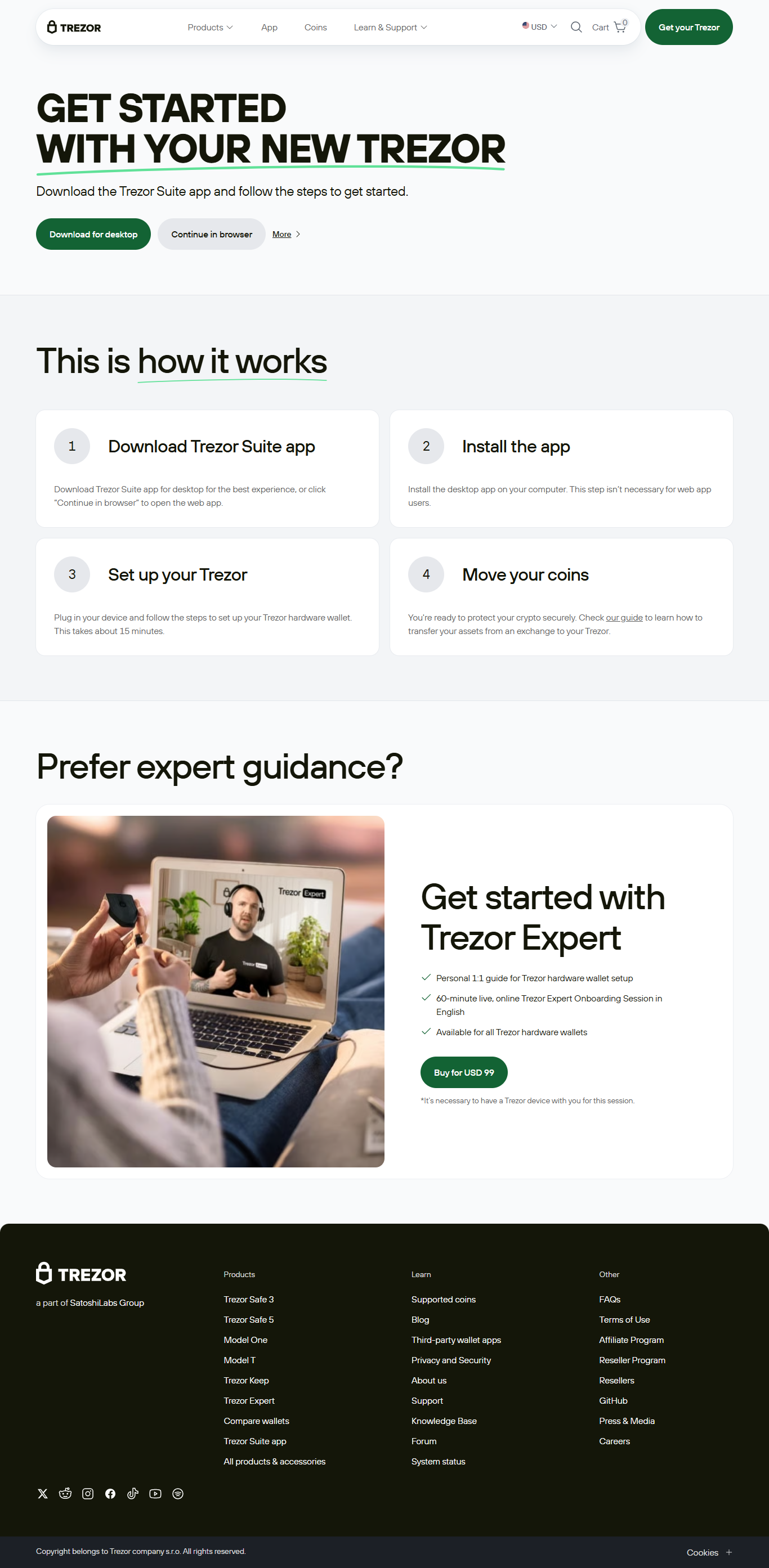
Trezor.io/Start Guide | Begin Your Trezor Wallet Setup
Setting up a hardware wallet is one of the most important steps you can take to secure your cryptocurrency. With rising concerns around exchange hacks, phishing attacks, and online vulnerabilities, self-custody has become essential for anyone serious about protecting their digital assets. The Trezor.io/Start guide is the official and trusted starting point for setting up your Trezor hardware wallet safely and correctly.
Created by SatoshiLabs, the pioneers behind the world’s first hardware wallet, the Trezor.io/Start process is designed to be simple, secure, and beginner-friendly—without compromising on advanced security standards. Whether you are new to crypto or upgrading your security setup, this guide helps you begin your Trezor wallet journey with confidence.
What Is Trezor.io/Start?
Trezor.io/Start is the official onboarding page for initializing and setting up a Trezor hardware wallet, such as the Trezor Model One or Trezor Model T. It provides step-by-step instructions to ensure your device is genuine, updated, and securely configured before you start managing cryptocurrency.
The setup process walks users through:
Connecting the Trezor device
Installing official software
Updating firmware
Creating a new wallet or restoring an existing one
Securing recovery seeds and PINs
By following the Trezor.io/Start guide, users reduce the risk of mistakes that could compromise wallet security.
Why Starting at Trezor.io/Start Matters
Using unofficial setup instructions or third-party websites can expose users to phishing scams and fake software. Trezor.io/Start ensures you are following verified and secure procedures directly from the manufacturer.
Authenticity Verification
The guide helps you confirm that your Trezor device is genuine and has not been tampered with. This includes checking security seals and installing official firmware.
Protection from Phishing
By directing users to the correct software and setup steps, Trezor.io/Start minimizes the risk of downloading malicious apps or interacting with fake wallet interfaces.
Best Practices from Day One
The guide emphasizes secure backup practices, PIN creation, and recovery seed handling—critical steps for long-term asset protection.
What You Need Before Starting
Before beginning the setup, make sure you have:
A new or reset Trezor hardware wallet
A computer with internet access
A USB cable to connect the device
A private, secure environment free from cameras or observers
Having these ready ensures a smooth and distraction-free setup process.
Step-by-Step Overview of the Trezor Wallet Setup
1. Connect Your Trezor Device
Plug your Trezor hardware wallet into your computer using the provided USB cable. The device will power on and prompt you to begin setup.
2. Visit Trezor.io/Start
Navigate to the official Trezor.io/Start page. From here, you will be guided to install Trezor Suite, the official wallet management software.
3. Install Trezor Suite
Trezor Suite is available as a desktop application for Windows, macOS, and Linux, as well as a web version. The setup guide recommends the desktop app for maximum security.
4. Firmware Installation or Update
If your device does not have firmware installed, or if an update is required, Trezor Suite will guide you through the process. Firmware updates are cryptographically verified to ensure authenticity.
5. Create a New Wallet or Restore One
You can choose to:
Create a new wallet (generates a new recovery seed), or
Recover an existing wallet using a previously saved recovery seed
This step determines how your private keys are generated and secured.
Understanding the Recovery Seed
One of the most critical parts of the Trezor.io/Start setup is generating and securing your recovery seed.
What Is a Recovery Seed?
A recovery seed is a series of words (usually 12, 18, or 24) that acts as a backup for your wallet. It allows you to recover your funds if your Trezor device is lost, stolen, or damaged.
How to Store It Safely
Write the seed down on paper or a metal backup
Never store it digitally (no photos, cloud storage, or screenshots)
Never share it with anyone
Trezor will never ask for your recovery seed online. Anyone who has access to it can control your funds.
Setting Up a PIN and Optional Passphrase
PIN Protection
During setup, you will create a PIN to protect access to your Trezor device. This PIN must be entered on the device whenever it is connected.
Passphrase (Advanced Security)
Trezor.io/Start also introduces the option to use a passphrase, which creates an additional layer of security. Passphrases generate hidden wallets and provide protection even if someone gains access to your recovery seed.
This feature is optional but highly recommended for advanced users.
Getting Started with Trezor Suite
Once setup is complete, Trezor Suite becomes your main interface for managing crypto.
Key Features Include:
Sending and receiving cryptocurrencies
Viewing balances and transaction history
Managing multiple accounts
Buying and exchanging crypto via trusted partners
Enabling privacy features like Tor
All transactions must be physically confirmed on the Trezor device, ensuring maximum security.
Supported Cryptocurrencies
After completing the Trezor.io/Start setup, you can manage a wide range of digital assets, including:
Bitcoin (BTC)
Ethereum (ETH)
Litecoin (LTC)
Cardano (ADA)
Polygon (MATIC)
Thousands of ERC-20 tokens
Support continues to expand with regular software updates.
Common Setup Mistakes to Avoid
The Trezor.io/Start guide helps users avoid common errors, such as:
Skipping firmware verification
Storing recovery seeds digitally
Reusing weak or obvious PINs
Falling for fake Trezor websites or emails
Taking your time during setup significantly reduces long-term risk.
Why Trezor.io/Start Is Ideal for Beginners
Trezor.io/Start is designed with clarity and simplicity in mind.
Beginner-Friendly Guidance
Clear instructions and visual prompts make it easy to follow, even for first-time crypto users.
Education Built In
The guide explains why each step matters, helping users understand security principles rather than blindly following instructions.
Long-Term Security After Setup
Completing the Trezor.io/Start process is only the beginning of secure crypto management.
Best Practices Going Forward:
Keep firmware and Trezor Suite updated
Store recovery seeds securely and offline
Verify addresses on the device screen
Be cautious of phishing attempts
By following these habits, users maintain strong protection over time.
Conclusion
The Trezor.io/Start guide is the safest and most reliable way to begin your Trezor wallet setup. It ensures your device is genuine, your software is secure, and your private keys remain fully under your control from the very first step.
By following this official guide, users gain more than just a wallet—they gain confidence, ownership, and long-term security over their digital assets. Whether you are storing crypto for the long term or actively managing a portfolio, starting at Trezor.io/Start lays the foundation for safe and independent cryptocurrency ownership.
For anyone serious about crypto security, Trezor.io/Start is where secure self-custody begins.