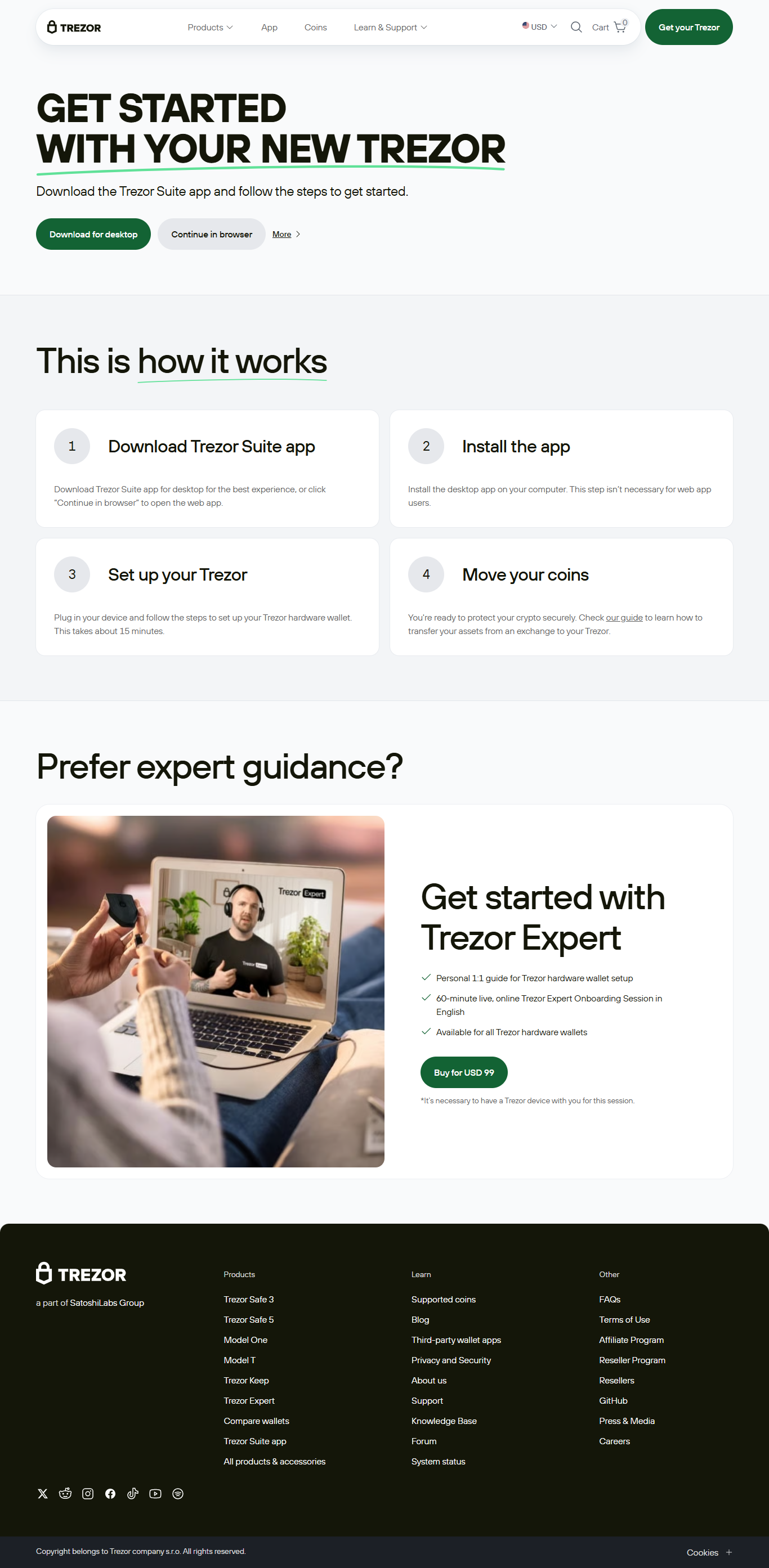
Trezor.io/Start Guide | Begin Your Trezor Wallet Setup
As cryptocurrencies become a long-term store of value for millions of users, the need for secure self-custody has never been more important. Hardware wallets provide one of the safest ways to protect digital assets, and Trezor has been a trusted name in this space since the very beginning of Bitcoin. The official onboarding page, Trezor.io/Start, is designed to help users set up their Trezor wallet correctly, securely, and with confidence.
This guide explains everything you need to know about Trezor.io/Start, why it is essential for wallet security, and how it helps you begin your Trezor wallet setup the right way.
What Is Trezor.io/Start?
Trezor.io/Start is the official setup portal for all Trezor hardware wallets, including Trezor Model One and Trezor Model T. It serves as the verified entry point for initializing a new device, installing official software, updating firmware, and securing your wallet.
Using Trezor.io/Start ensures that you are interacting only with authentic Trezor tools and not falling victim to fake websites, malicious downloads, or phishing attempts that target crypto users.
Why You Should Always Start at Trezor.io/Start
The setup process is one of the most critical stages in securing a hardware wallet. Errors made at this stage—such as downloading unofficial software or mishandling recovery phrases—can permanently compromise your funds.
Trezor.io/Start helps prevent these risks by:
Verifying your device is genuine and unused
Directing you to official Trezor software
Ensuring firmware is securely installed
Teaching proper recovery seed storage
Explaining essential security features
Starting at this page gives you a strong security foundation that protects your assets long term.
Step 1: Unbox and Connect Your Trezor Device
After unboxing your Trezor hardware wallet, Trezor.io/Start instructs you to connect it to your computer using the included USB cable. The system checks whether your device is authentic and whether it already has firmware installed.
This verification step ensures:
The device has not been tampered with
No malicious firmware is present
You are starting from a secure, clean state
This protection is especially important against supply-chain attacks.
Step 2: Install Trezor Suite
The next step in the Trezor.io/Start guide is installing Trezor Suite, the official wallet management application developed by SatoshiLabs.
Trezor Suite allows you to:
Manage supported cryptocurrencies
View balances and transaction history
Send and receive digital assets
Update firmware securely
Use privacy features such as Tor
The software works hand in hand with your hardware wallet while keeping private keys completely offline.
Step 3: Install or Update Firmware
New Trezor devices do not come with pre-installed firmware. Trezor.io/Start walks you through installing the latest official firmware directly onto your device.
Firmware installation:
Adds the latest security protections
Fixes known vulnerabilities
Ensures compatibility with new assets
You must confirm the firmware installation on the Trezor device itself, preventing unauthorized changes.
Step 4: Create Your Wallet
Once firmware is installed, you will create a new wallet. During this process, your private keys are generated securely inside the Trezor device and never exposed to the internet.
This step establishes your wallet’s identity on the blockchain and ensures you are the sole owner of your funds.
Step 5: Write Down Your Recovery Seed
Your recovery seed is the most important part of your wallet setup. Trezor.io/Start carefully guides you through writing down your seed phrase, which consists of 12, 18, or 24 words depending on your device.
Key recovery seed rules:
Write it down on paper only
Never store it digitally
Never share it with anyone
Keep it in a secure, offline location
If your Trezor device is lost or damaged, the recovery seed is the only way to restore access to your funds.
Step 6: Set a Secure PIN
Trezor.io/Start requires users to set a PIN code that protects the physical device from unauthorized access. Each time you connect your Trezor, the PIN must be entered.
The PIN entry system uses a randomized keypad layout, which protects against keyloggers and screen-recording malware.
This ensures that even if someone steals your device, they cannot access your funds.
Step 7: Optional Advanced Security Features
For users seeking additional protection, Trezor.io/Start introduces advanced features such as:
Passphrase protection – Adds an extra secret word to your recovery seed
Shamir Backup – Splits your recovery seed into multiple parts
These features are especially useful for users managing large crypto holdings or requiring institutional-grade security.
Supported Cryptocurrencies
After setup, Trezor wallets support thousands of digital assets, including:
Bitcoin (BTC)
Ethereum (ETH)
Litecoin (LTC)
Cardano (ADA)
Polygon (MATIC)
ERC-20 tokens
Binance Smart Chain tokens
Support continues to expand through firmware and software updates.
Privacy and Transparency
Trezor.io/Start reflects Trezor’s commitment to user privacy and decentralization.
No account registration required
No personal data collected
Fully open-source software
Publicly auditable code
This transparency allows users to trust the platform and verify its security independently.
Common Setup Mistakes This Guide Helps Avoid
By following the official Trezor.io/Start guide, users avoid:
Downloading fake wallet software
Using compromised devices
Losing or exposing recovery seeds
Skipping critical firmware updates
Misunderstanding wallet ownership
These mistakes often lead to permanent loss of funds, making proper setup essential.
Who Should Use This Guide?
The Trezor.io/Start guide is ideal for:
First-time Trezor users
Long-term crypto investors
Security-conscious individuals
Anyone resetting or upgrading a Trezor device
If you own a Trezor wallet, this guide is your safest starting point.
Long-Term Benefits of Proper Setup
Starting correctly ensures:
Full ownership of your private keys
Strong protection against online attacks
Reliable recovery in emergencies
Peace of mind for long-term storage
When combined with good security habits, a properly set-up Trezor wallet offers one of the safest crypto storage solutions available.
Conclusion
Trezor.io/Start Guide | Begin Your Trezor Wallet Setup provides a clear, secure, and trusted path to cryptocurrency self-custody. By guiding users through device verification, firmware installation, recovery seed protection, and PIN setup, it eliminates common risks and establishes a strong security foundation.
If you are serious about protecting your digital assets, beginning your journey at Trezor.io/Start is the smartest and safest way forward.